
What happens when your private pleasures become public record?
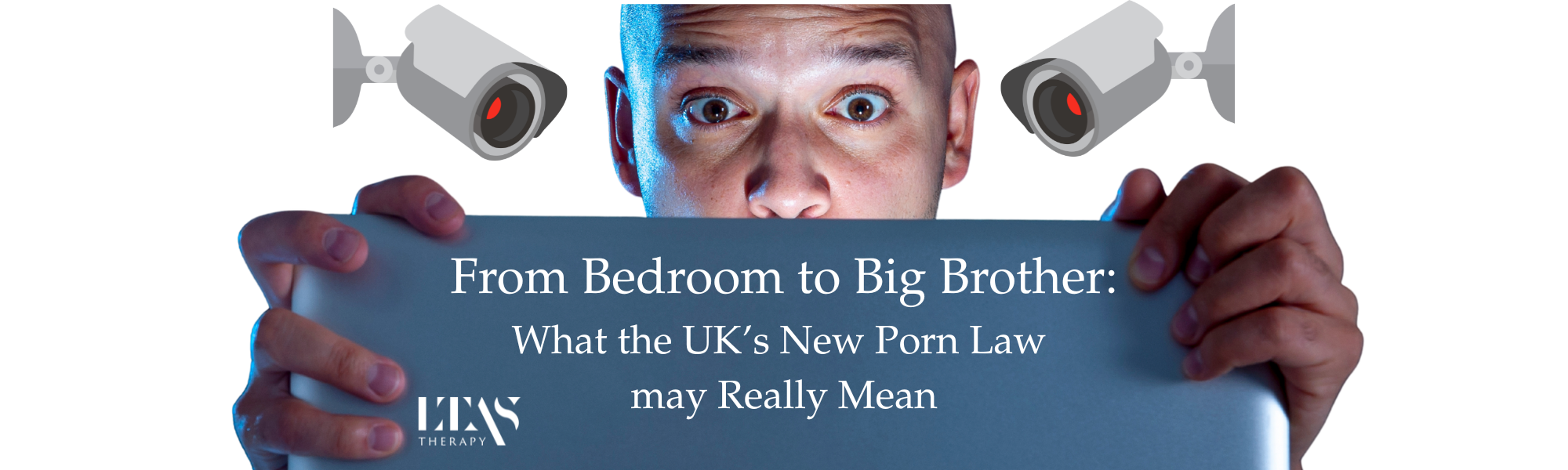
So porn sites now want your face and ID on their database… mandated by the government!
Warning: this is a long read… also, this may contain sensitive material not suitable for younger readers.
I've been deliberating over posting this content for about 10 days now and the words have sat in my ears so here I am with some mild trepidation, finally writing them down.
The UK’s new age-verification law for adult content is being sold as protection. But critics warn that it could be the start of "state-sanctioned sexual surveillance". What do you think?
From 25 July 2025, the UK’s Online Safety Act introduced “highly effective” age checks for any platform hosting explicit content. Here are the headlines:
Verification methods: government-issued ID, biometric scans, or other official proof.
Enforcement: Ofcom fines up to £18m or 10% of global turnover; sites can be blocked entirely.
Goal: protect children from online pornography.
And here's the part that makes the scope clearer:
29% of UK adults use porn (~13.8m people).
36% of men watch weekly; 13% daily or most days.
4% of women watch weekly.
35% of viewers feel guilt afterwards.
First exposure often happens between ages 9–13.
We’re already seeing the impact. Several sites including some that label themselves as "ethical porn" sites have already closed their virtual doors to UK viewers.
One platform put it plainly stating:
"While United Kingdom law regarding age verification has the intent to protect children, the current approach is flawed and inadvertently hinders content creators from legally sharing their adult content and freedom of artistic expression. It is unfortunately no longer possible for us to remain compliant to United Kingdom law while providing access to our content here, and have made the difficult decision to disable (name withheld by me)in United Kingdom."
Regardless of my personal opinion and views on adult content and its consumption I have cannot help to think about the wider implications. What does it mean for users? Is it as simple as stumping up the ID, show your face, keep calm and carry on? Or should we be asking harder questions?
Is it enough to accept that the aim is safeguarding children and is it "par for the cause" that users are now open to potential exposure from data leaks?
Consider what this might mean for for...
Those in public-facing roles who value their privacy?
People in communities where porn use is taboo?
Individuals exploring sexuality as part of healing or identity?
Industry workers who have campaigned for equality, fair pay and the right to create content suitable for marginalised groups?
And that’s just the start, but should we care at all?
From Law to Life
On paper, it’s straightforward. But in real life, the fact is that this law doesn’t just change the clicks we make, but perhaps it changes how we feel about making them, and, like other drivers of substance misuse or compulsive behaviours, those shifts in feeling can influence what people do next.
While some people may use VPNs and other workarounds to keep themselves hidden, the law can't keep everyone safe. Some may simply stop, not because they want to, but because they can’t risk their names (or faces) living on a server somewhere ripe for hacking. Still others may be driven to explore other avenues of fulfilment that may prove more harmful to themselves and the wider community.
Either way, we need to explore what happens when the fear of being seen outweighs the need for open, healthy conversations about sexuality.
Cultural Ripple Effects
Porn has always been a cultural flashpoint, but this law may magnify certain fault lines, including:
Moral polarisation; Reinforcing “good” vs. “bad” narratives about sexuality not only adds to shame, guilt, and questions of worth, but also deepens the divide between those who see sexual expression as healthy and those who see it as inherently harmful. This polarisation can stifle deeper, more nuanced discussions, making it harder for people to find balanced, realistic ways to engage with their sexuality without feeling judged or ostracised.
Generational divides: Some older adults may view the law as overdue, a moral safeguard that aligns with traditional values. Younger adults may see it as overreach, an infringement of privacy, and a sign of heavy-handed surveillance. These generational “fault lines” can create tension in families, workplaces, and online spaces, where debates about morality, safety, and personal freedom risk becoming battlegrounds rather than opportunities for shared understanding.
Erosion of trust in institutions; When privacy is breached, public trust in government and tech companies doesn’t just decline; it fractures. And a major data leak wouldn’t just name names, it could ignite a feeding frenzy of speculation about the sexual preferences and private habits of those in positions of power. Imagine the headlines if high-profile leaders or decision-makers appeared on the list of verified porn users.
Impact on sexual education: If adults become more secretive, opportunities for intergenerational, shame-free conversations about sex may shrink. Additionally, with first exposure to porn happening as young as age nine, the absence of open dialogue leaves stereotypes about sex, often shaped by unrealistic, closed-door pornography use (now underground) open to take root unchallenged. These unexamined scripts can influence how young people understand consent, pleasure, body image, and relationship dynamics long before they have the tools to critically evaluate what they see.
Unspoken Taboos
We know that there are many things we rarely say aloud in public debate about life, let alone sex or porn use. Here are a few common yet perhaps less discussed ones.
Some people use it as a coping mechanism for loneliness, grief, or mental health struggles.
For survivors of sexual trauma, it can be part of reclaiming sexual agency.
For those with physical disabilities, it may be the most accessible form of sexual expression.
Women watch porn even if society pretends they don’t.
Perhaps the biggest of all is that Shame, not porn itself, is often the bigger relational toxin.
Laws like this rarely engage with these complexities, but they matter deeply in life, in therapy rooms and for relationships.
The Therapeutic Lens
In therapy, I see how external (and internalised) rules can quickly become triggers. For some, this may well be the “push” they needed to reassess their relationship with porn. For others, it could fuel (even more) shame, secrecy, anxiety and more. Certain groups (like LGBTQ+ individuals) in unsafe environments, women facing double standards, survivors exploring healing and others may feel that their safety net has been stripped away.
And relationships will be impacted too:
Some couples will finally address porn use openly.
Others will hide it more deeply.
Shame will deepen, fuelling secrecy and emotional distance.
Trust may be tested, not necessarily because of the porn itself, but because of how it’s been accessed or concealed.
Intimacy could be reshaped, for some, toward greater honesty; for others, toward guardedness and withdrawal.
When a personal habit becomes a public risk, it’s not just the user who feels the ripple; it's the wider community: their partner, family, and sense of relational safety can all be affected.
The Bigger Questions
Yes, protecting children is crucial. But if the only way to do it is by tracking adults, we must ask:
Is this safety… or surveillance? And if shame is the motivator, are we helping people heal — or just pushing them further underground?
Where We Go From Here
These are big questions, but they’re only part of the conversation. We need to go beyond the surface with more themes and questions including:
Privacy vs. Protection: Is “sacrificing” adult privacy the only way to safeguard children?
Unintended Consequences: Will this push conversations underground rather than encourage healthy dialogue?
Vulnerability Gaps: Who might really be most affected, and why?
Relationship Dynamics: Could this be a catalyst for openness, or a trigger for deeper secrecy?
Digital Trust: What happens if verification data is hacked or leaked?
Last year, I wrote about the concept of Ethical Porn, today, I’m writing about the efficacy of changes to the laws on online safety adn the wider impact. Lime many, I have my own views and feelings about porn, but these are themes we cannot avoid. The deeper, more uncomfortable questions, the ones we rarely say out loud, are the ones we need to ask now, not later.
Because the conversation we’re not having about these issues may be the most important ones yet.