
Confessions of a “Bad Therapist”
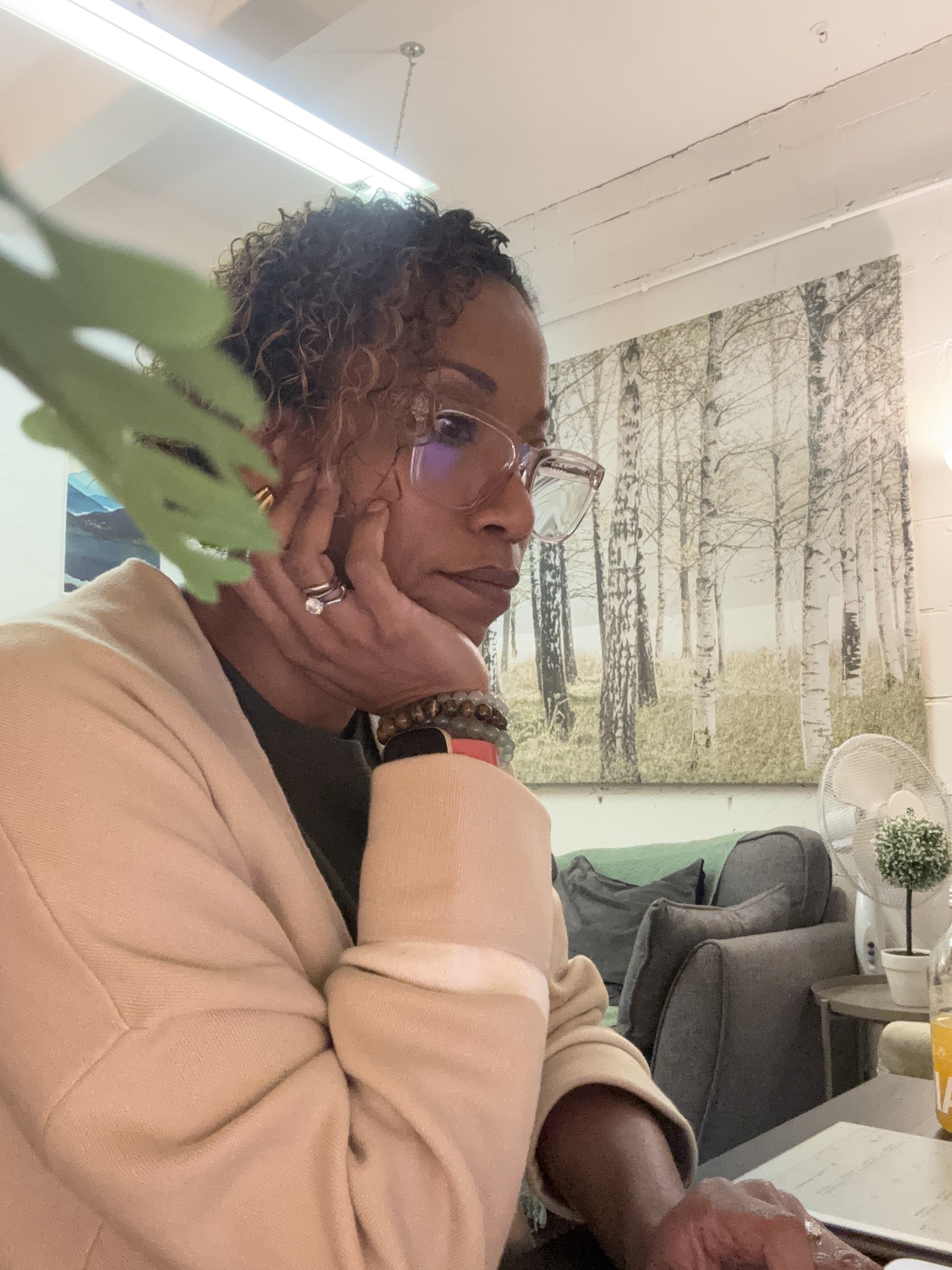
Moment in the head of a therapist.
Some days, I sit in the therapy room and quietly wonder if I’m the wrong person for the job.
I spend almost every day doubting my ability to do the work. Not openly (though here I am, outing myself publicly), and not overtly, but somewhere deep inside, there is a voice that whispers words of discord between the therapist I am and the one I am striving to be.
And it rarely whispers.
It screams.
Sometimes that voice sounds like:
You can’t help them.
You don’t know enough about this.
Who do you think you are?
What are you missing?
… the list can feel endless.
Earlier in my career, it would have almost completely disrupted my flow, pulling me into a darkened abyss of doubt, an echoing fear of failure. I can’t lie, there were moments when I felt I had missed what my clients were saying. Those moments felt endless, though in reality they lasted only seconds, maybe a minute or two at most.
What’s worse was the listening.
When I listened to that voice, it cost me the joy of the process. The celebration of small moments of discovery that my clients experienced. The ability to sit in gratitude when someone said, “You’ve made a difference.”
But most significantly, it cost me peace.
Feelings of guilt, doubt and inadequacy would follow me into the evening, hours of rumination I wouldn’t wish on anyone.
And in those moments, I would reach for the models and approaches I’d been taught over the years. Jumping from paper to book, podcast to Instagram pages, searching for the perfect way to be.
Such futility.
However, as time passed, I learned to swat that voice away like a fluttering gnat on a cool summer evening, hovering, intrusive, shadowing my every move. Crouching in the archways of my soul, disguising itself as ethical concern or moral responsibility.
And if I’m honest, that voice didn’t come from nowhere.
It has been shaped by culture, suggesting that efficacy lives in certificates neatly displayed on office walls.
By training, reminding me to find the “right” model.
By society and pop culture, where everyone suddenly seems like an expert.
By faith, a deep calling to help and hold others well.
And by my own expectations, that somehow I needed to be more than I already am.
Over the past 18 months, especially, I’ve learned to quiet that voice.
Not because it has nothing valid to say, but because I’ve discovered something surprising.
The moments when I feel I’ve done my worst job, “bad therapy” as I call it, are often the moments my clients experience their biggest breakthroughs.
And that still blows my mind.
So I’ve started taking my own advice.
I hear the voice, and I let it pass.
It doesn’t get the final say. My clients’ outcomes do.
I’m not sure there was one exact moment when everything shifted, and I can’t promise that voice won’t return. In many ways, I think it is part of the work we do.
But what I do know is this.
Somewhere, despite my doubt and feelings of inadequacy, I am still able to reach someone.
Meeting clients where they are, holding their stories with care, and helping them make meaning of their lived experience, this matters deeply to me.
And it wasn’t a textbook that taught me that.
It was sitting with clients.
Hearing the voice.
Challenging where it came from.
And choosing to put it back in its place.
I bring all of me into the room. Not just the trained therapist, but the human being. And honestly, it is the most vital role I play, and the most honest “model” I’ve ever practised.
I remember sitting in a class, listening to a respected practitioner speak openly about their own doubts. I was struck by how someone so capable, so admired, could feel the very same way I did.
And in that moment, I realised something important.
I was not alone with my imposter shadow.
As others in the room spoke with admiration and gratitude for his work, I realised something else too. Our inner voice often sounds louder than the truth.
So here’s to all of us “bad therapists”, or rather, all of us who feel like we are.
The ones who question themselves.
The ones who sit with the discomfort.
The ones who bring their full humanity into the room and still wonder if it’s enough.
Because here’s the truth.
It’s not perfection that creates change.
It’s presence.
It’s attunement.
It’s the courage to stay.
We learn every day from our clients, or at least we should. And in doing so, we become better practitioners, but also better humans.
So if you’ve been quietly questioning yourself lately, let this be your reminder.
You are not behind.
You are not failing.
You are in the work.
And what I know about the therapist I am becoming is this.
She is not a finished product.
She is not measured by the number of books she’s read, articles she’s written, or clients she sees.
She is human.
She is capable.
She is present.
And that is more than enough.
If this resonated with you, and you want to learn more through therapy for yourself or your relationship, reach out to me on info@ltas.uk.
And until next time, let’s talk about it, because the conversation we’re not having about these issues may be the most important ones yet.